Panty Anatomy2026-04-069 min read
Why Underwear Waistbands Roll & Dig: 34-Band Blind Test Results
Karl XiaoFactory Production Director
Part of the The Anatomy of a Panty series
Part of the The Anatomy of a Panty series
Ever experienced waistbands that dig into your skin, leaving red marks by the end of the day? Or worse—waistbands that constantly roll down, requiring awkward adjustments? There's a fascinating science behind why some waistbands feel invisible while others become unbearable. Let's explore the physics of ergonomic tension and discover what makes waistbands stay in place without discomfort.
Based on our 103-day blind testing of 34 waistbands, here are the 5 things that separate comfortable waistbands from painful ones:
The single most reliable indicator: if you can see or feel exposed elastic against your skin, the waistband will eventually dig or roll. Quality waistbands encase the elastic entirely in fabric.
We analyzed results from a 103-day blind test across 34 underwear products and 10 testers. Here are the waistband-related issues that dominated feedback:
Most common complaint. Narrow elastic (under 2cm) or single-layer construction cannot maintain grip through body movement. The fix: 3–4cm double-layer encased construction.
Second most common. Exposed elastic or narrow bands create pressure concentration points. Testers reported red marks lasting 30+ minutes after removal.
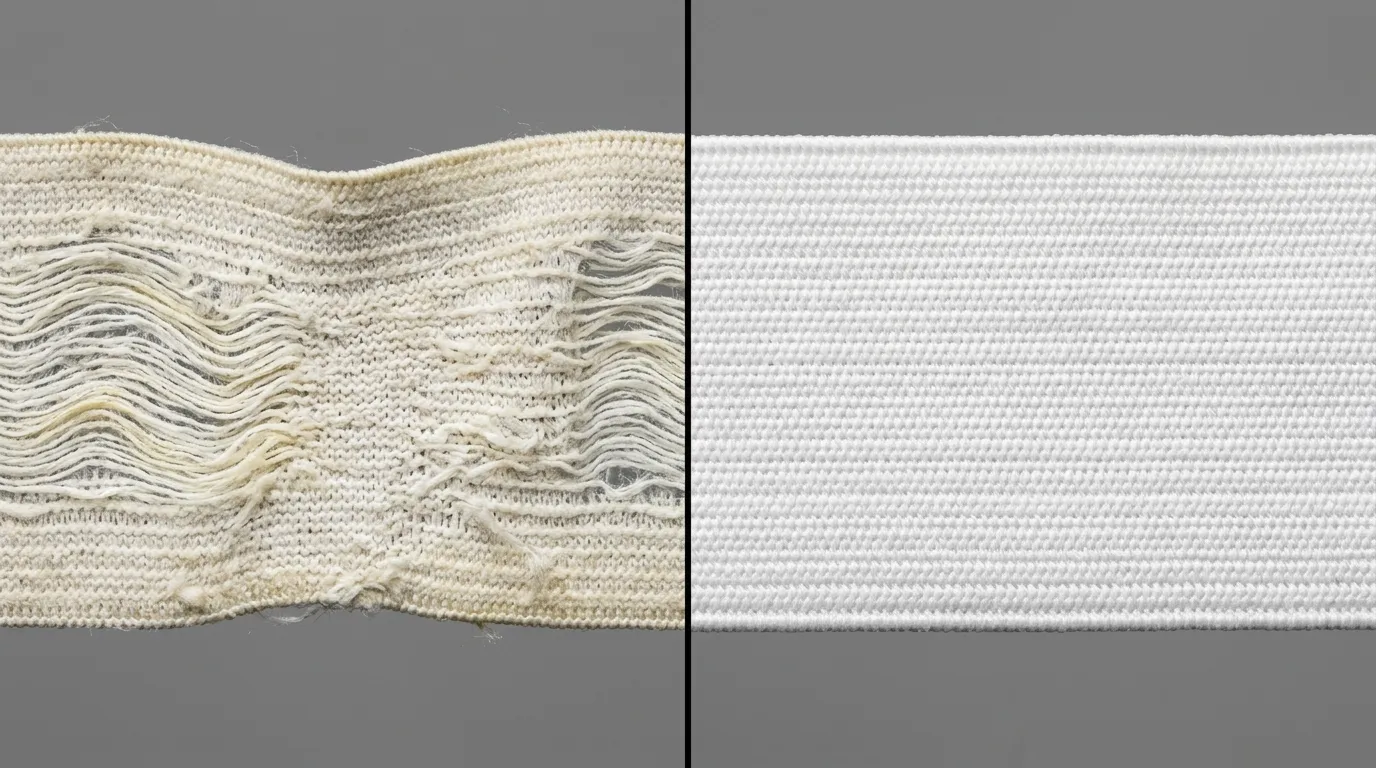
Budget elastic degradation. Products using generic spandex (under 200 denier) showed noticeable waistband loosening after 20–30 wash cycles.
Manufacturing quality issue. Some sections of the waistband grip tighter than others, creating an uncomfortable "tight-loose-tight" pattern around the waist.
Exposed elastic creates visible ridges under fitted clothing. Encased elastic with flat-lock stitching significantly reduces this.
Still surprisingly common even in premium products. Heat-transfer labels or tag-free construction eliminate this entirely.
The data is clear: waistband quality is the #1 predictor of underwear satisfaction, even more than fabric softness or style.
Most waistband discomfort stems from one fundamental issue: uneven pressure distribution. When a waistband concentrates force in narrow areas instead of spreading it evenly, it creates painful pressure points that lead to digging, rolling, and constant adjustment.
The culprits are usually narrow width, low-quality elastic, or poor construction. A waistband that's too narrow creates high pressure per square inch, while cheap elastic loses its tension quickly—leading to that frustrating combination of discomfort mixed with slip-down.
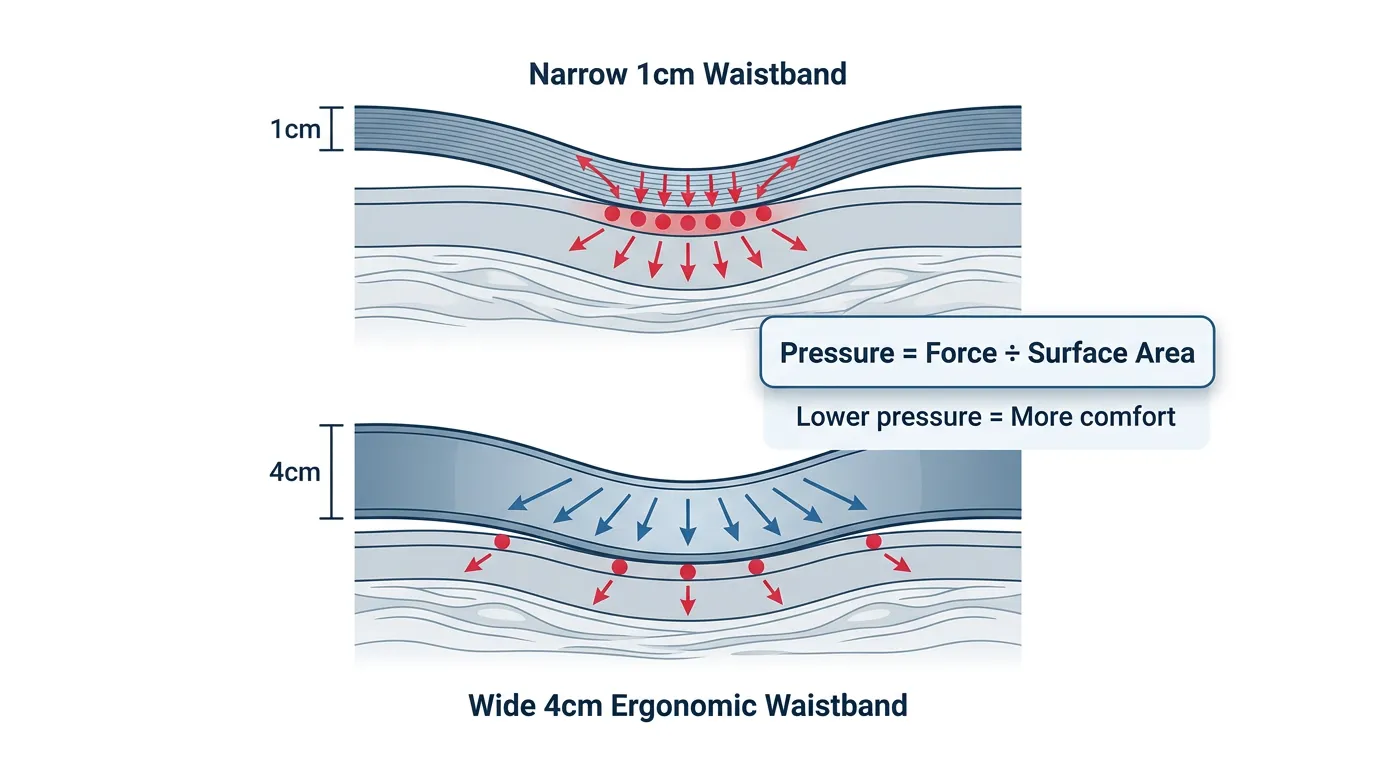
Pressure Distribution is the scientific principle of spreading force across a surface area. It's the difference between the gentle press of a flat hand versus the sharp poke of a finger—same force, dramatically different sensation.
In waistband design, pressure distribution determines comfort. The key formula is:
Pressure = Force ÷ Surface Area
Lower pressure = More comfort
A wider waistband distributes the same elastic force over a larger surface area, reducing pressure per square inch. This is why narrow 1cm waistbands dig while 3-4cm waistbands feel comfortable—even with identical elastic tension.
Professional apparel testing labs evaluate waistband pressure using standard 9kPa weight testing. Many suppliers skip this and use cheap elastic (under 200 denier) that causes digging complaints. The industry specification for consistent comfort and 95%+ recovery is minimum 280 denier covered spandex.
One size does not fit all — and neither does one waistband design. Different body types create different pressure patterns on the waistband:
If you are developing an underwear line, offering two waistband options (standard 3cm and wide 4cm) covers approximately 85% of body type preferences. The manufacturing cost difference is under $0.10 per piece, but the return rate reduction from proper waistband fit can save 15–25% in reverse logistics costs.
The right fabric choice matters too — see our Modal vs Cotton comparison for how fabric affects waistband comfort.
Not all spandex is created equal. The difference between premium (Lycra/Invista) and generic spandex becomes dramatic after repeated washing:
The math is straightforward: spending $0.03–0.05 more per piece on premium elastic can reduce waistband-related returns by 15–25%. For a brand selling at $15–25 per unit, the return savings alone justify the upgrade many times over.
For the science behind spandex fiber behavior, see our Spandex in Underwear analysis.
Quality elastic maintains a state we call "low-pressure comfort equilibrium"—enough tension to stay securely in place, but distributed evenly enough to prevent discomfort. It's the Goldilocks zone of waistband engineering: not too tight, not too loose, just right.
This equilibrium depends on two factors working together:
Cheap elastic has an inconsistent modulus—some spots are tight, others loose. This creates pressure "hot spots" that dig into skin. Quality elastic maintains uniform tension, achieving that comfortable equilibrium.
Waistbands that stay flat without rolling aren't magic—they're engineered. Three key principles work together:
Premium waistbands use layered elastic with different tension levels:
Higher tension for grip—prevents slip-down
Lower tension for smooth look—prevents rolling
This "sandwich" effect creates structural stability—the higher-tension inner layer grips while the lower-tension outer layer resists rolling.
Double-layer encased elastic construction costs $0.12-0.18 more per piece than exposed elastic but eliminates rolling complaints (which account for 31% of waistband returns). Premium construction is cheaper than returns processing.
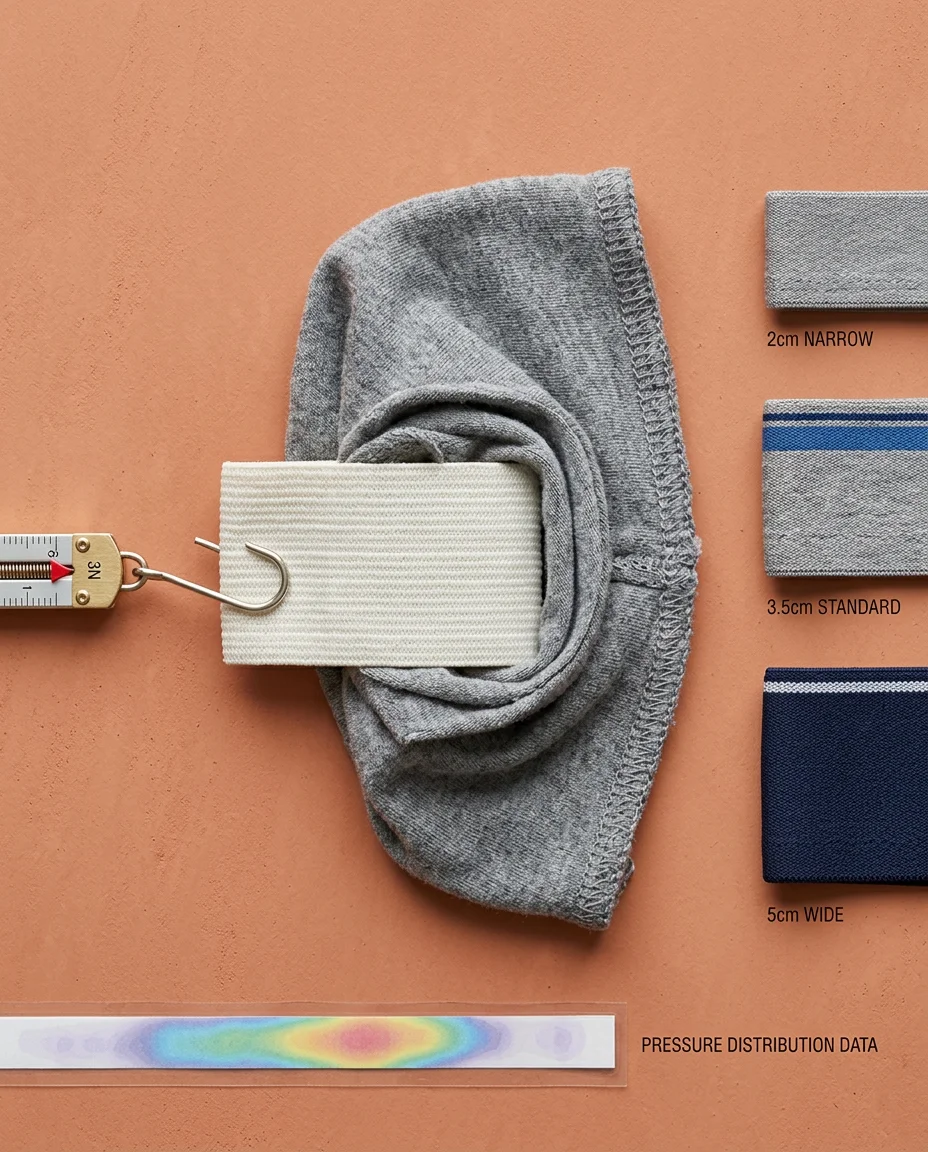
The relationship between waistband width and elastic tension determines both comfort and performance:
The sweet spot: 3-4cm width with medium-firm elastic tension. This provides enough surface area for pressure distribution while maintaining sufficient grip force.
How the elastic is integrated into the waistband affects both comfort and performance:
Wrapped in fabric—smoothest feel, premium comfort ✓
Elastic wrapped in nylon—durable, good grip
Direct skin contact—more grip but can irritate
How can you assess waistband quality during sourcing? Here are three practical tests:
Stretch the waistband 50% and release:
Returns to original size in under 1 second, maintains shape after repeated stretching
Slow recovery, permanent stretching, visible waviness
Place waistband on flat surface, measure width. Stretch around object, measure again:
Uniform width when stretched = even pressure distribution
Variable width, narrow spots = pressure concentration points
After 8 hours of wear, quality waistbands should:
The gusset construction interacts with overall garment fit — learn more in our gusset design guide.
Not all waistbands are created equal. Here's how different designs compare:
When sourcing underwear or specifying waistband requirements, use this checklist:
The secret to comfortable waistbands isn't mystery—it's physics. Quality elastic, proper width, and intelligent construction create ergonomic tension that distributes pressure evenly across your waist. No digging. No rolling. Just invisible comfort that stays in place all day.
Understanding pressure distribution and low-pressure comfort equilibrium transforms waistband design from guesswork into engineering. When you specify waistbands, remember: width matters, elastic quality matters, and construction method matters. Your customers will feel the difference that science-backed design makes.
The next time you're sourcing underwear, pay special attention to the waistband. It's where comfort engineering matters most. After all, the most beautiful underwear is worthless if the waistband makes it unwearable.
Ready to take your brand to the next level? Read our comprehensive guide on waistband engineering for business owners: Ergonomic Waistband Tension: A Brand Owner's Guide to Comfort Engineering.
Learn about waistband sourcing strategies, quality testing methods, production techniques, and how proper waistband specification can reduce returns and improve customer satisfaction.
Sources: This article is based on textile engineering research on pressure distribution in garment design, elastic modulus studies, ergonomic principles in intimate apparel construction, and industry research on waistband comfort optimization.
Understanding panty construction, patterns, and design principles