Fabric Science2026-04-069 min read
Best Spandex % for Underwear: Why 5% Wins (100-Wash Test)
Karl XiaoFactory Production Director
Part of the The Fiber Lab series
Part of the The Fiber Lab series
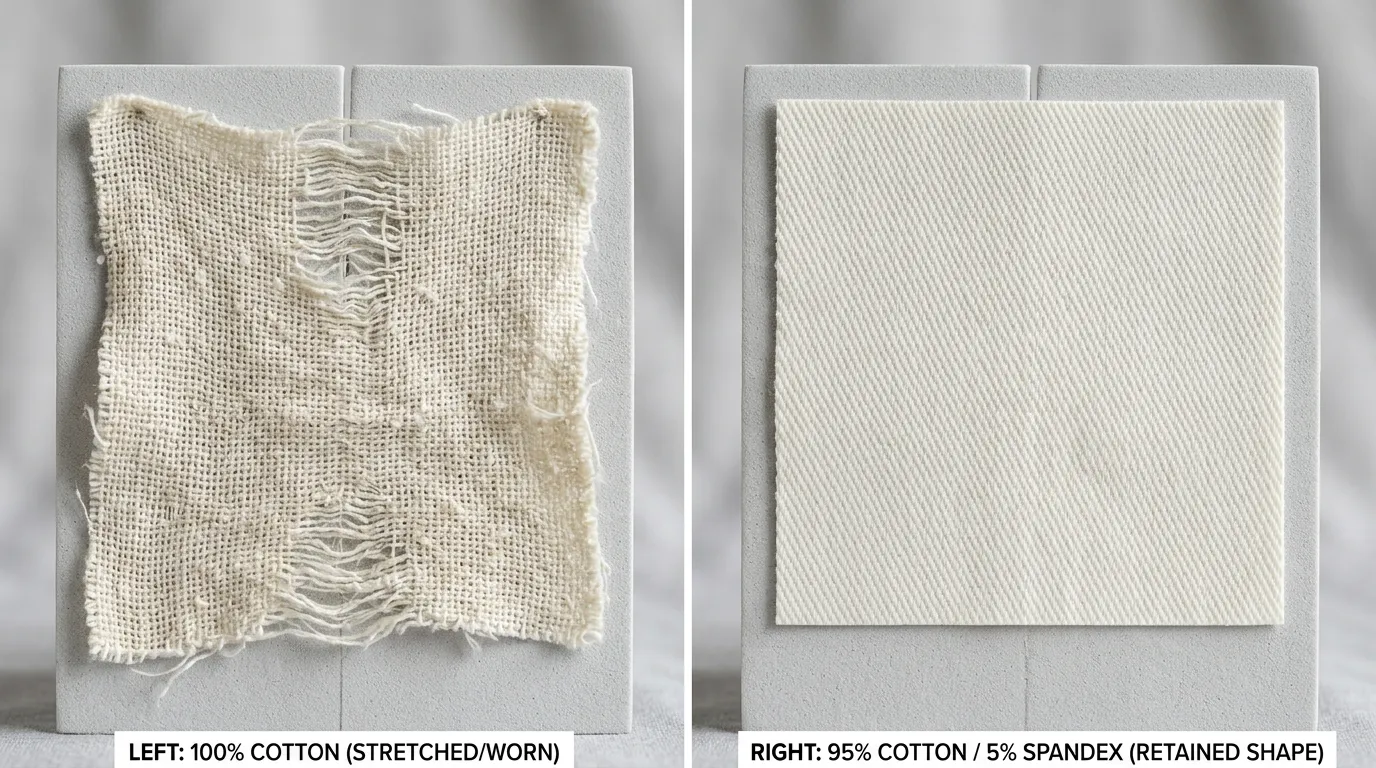
5% spandex (elastane) is the underwear industry's benchmark because it delivers 30–50% stretch with 95%+ recovery after 100+ washes. Below 3% spandex, underwear bags and sags by noon. Above 8%, the fabric feels synthetic and loses breathability. The 95% cotton / 5% spandex blend hits the sweet spot: natural comfort, all-day shape retention, and premium durability. The science behind this comes down to capillary channel density and elastic modulus — see the data below.
Ever put on a fresh pair of underwear in the morning, only to find them baggy and saggy by afternoon? Or struggled with waistbands that roll down and legs that ride up? The culprit isn't poor quality—it's physics. Pure cotton has no memory. Once stretched, it stays stretched. This is why the underwear industry has converged on a seemingly precise formula: 95% cotton, 5% spandex. Let's explore the science behind this "magic number" and why it creates the perfect balance of comfort and shape retention.
There's a persistent belief that "100% cotton" equals superior quality. It's natural, breathable, and feels soft against the skin. But here's the uncomfortable truth: cotton has zero elasticity. A cotton fiber is like a rigid rope—it can stretch slightly under force, but it doesn't snap back. Once cotton fabric is extended, it remains in that deformed state.
Imagine cotton fibers as tiny, inflexible wires woven together. When you move, your body stretches this wire mesh. The wires bend and shift, but they have no "desire" to return to their original position. The result? Underwear that gradually transforms from a snug, supportive fit into a loose, saggy garment that offers zero compression or support.
As a professional apparel manufacturer, we recommend ASTM D3107 stretch testing for all elastic fabrics. Many suppliers claim "5% spandex" but use inconsistent elastic modulus. We verify every batch with laboratory testing to ensure consistent recovery performance.
The quality of spandex matters as much as the percentage. One reason premium underwear maintains its shape longer comes down to fiber diameter — the thickness of individual filaments in the yarn.
Here is the key insight: finer cotton or Modal fibers (40-count and above) create less resistance against spandex recovery. The elastic network can pull finer fibers back to position more efficiently. This is why a 5% spandex blend using 80-count Modal yarn maintains shape better than a 5% blend using 30-count coarse cotton — same spandex percentage, different real-world performance. Learn more about how Modal compares to cotton in moisture transport in our Modal vs Cotton Underwear guide.
Yarn count directly affects how well spandex performs:
Shape Retention is a textile property that describes a fabric's ability to return to its original dimensions after being stretched, compressed, or deformed during use. It's essentially "fabric memory"—the capacity to remember and recover its intended shape.
Spandex (also called elastane or sold under the brand name Lycra) is a synthetic elastic fiber invented in 1958 by chemist Joseph Shivers at DuPont. Its name is an anagram of "expands"—and for good reason. A single spandex fiber can stretch up to 500-800% of its original length and still return to its exact starting dimension with near-perfect recovery.
Here's the key insight: spandex is woven together with cotton fibers, not added as a separate layer. The spandex fibers form an elastic network within the fabric structure. When you move, both cotton and spandex stretch together. But when you stop moving, the spandex fibers contract—pulling the cotton fibers back to their original position. This creates the "shape memory" effect.
As a professional apparel manufacturer, we source covered spandex yarn (280-320 denier) for durability. Cheap elastic degrades quickly from sweat and detergent, causing bagging after 20-30 washes. Premium elastic maintains 95%+ recovery even after 100 wash cycles.
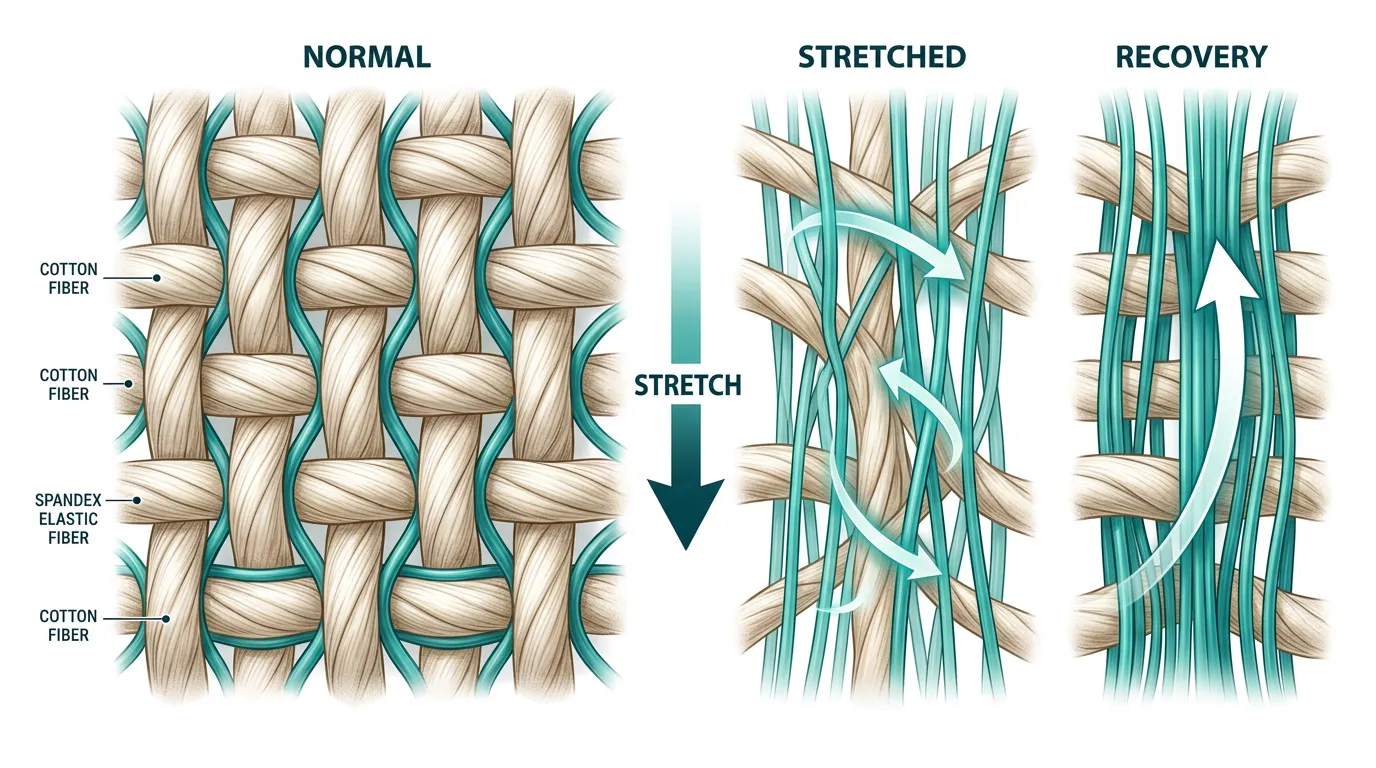
Only 5% spandex is needed because spandex is incredibly powerful. A little goes a long way. At 5%, spandex forms a continuous elastic network that provides 30-50% stretch to the fabric—more than enough for comfortable movement while maintaining excellent shape retention. Higher percentages don't significantly improve performance and can actually reduce comfort.
The ideal underwear fabric balances stretch (ability to extend) with recovery (ability to return). This is the elasticity equation:
Stretch + Recovery = Comfort + Shape Retention
Too little stretch (0% spandex), and fabric feels restrictive and deforms permanently. Too much stretch (10%+ spandex), and fabric feels synthetic, loses breathability, and can create uncomfortable compression. The sweet spot lies at 5% spandex.
At 5% spandex, you get the Goldilocks zone: substantial stretch for comfort (30-50%), excellent recovery for shape retention (95%+), and the fabric retains 95% cotton's natural feel and breathability. Higher spandex content increases synthetic feel without proportional benefit—while 5% provides optimal elasticity equation balance.
Understanding spandex degradation is essential for both consumers and brand owners. The quality of the spandex yarn — not just the percentage — determines how long underwear maintains its performance.
Consumer-grade elastic (generic spandex, <200 denier):
Premium elastic (covered spandex, 280–320 denier):
For more on how waistband elastic affects comfort, see our guide on No-Dig Waistband Underwear.
Three things destroy spandex faster than anything:
For brand owners, specifying covered spandex yarn at 280–320 denier is one of the most cost-effective quality decisions you can make. The cost difference is approximately $0.03–0.05 per piece, but it can reduce waistband-related returns by up to 31%.
If 5% spandex is good, wouldn't 10% or 15% be better? Not necessarily. As spandex percentage increases, several undesirable effects emerge:
Cotton fibers are naturally porous and allow air circulation. Spandex fibers are solid and less breathable. Above 5%, the fabric's overall breathability decreases—trapping heat and moisture.
Cotton's soft, natural touch comes from its irregular fiber surface. Spandex is smooth and uniform. Higher spandex percentages make fabric feel slick, plastic-like, and less comfortable against sensitive areas.
Cotton absorbs moisture into its hollow fibers. Spandex is hydrophobic (water-repelling). More spandex means reduced absorption capacity—leading to dampness issues during physical activity.
Paradoxically, high-spandex fabrics may have shorter lifespans. Spandex degrades from heat, sweat, and detergent. Higher spandex content means more elastic fiber to break down over time, causing fabric to lose recovery faster.
For everyday underwear, where comfort, breathability, and moisture management are paramount, 5% spandex delivers optimal performance without these trade-offs. Higher spandex blends have their place—compression garments, competitive swimwear, cycling gear—but they're overkill for daily wear.
The most advanced underwear construction goes beyond simply blending spandex into a single fabric layer. Dual-layer fabric engineering creates a functional gradient that single-layer blends cannot achieve.
100-count Modal — Ultra-fine fibers (10–15μm) create maximum surface area for moisture absorption. Acts like a pump, pulling sweat away from skin into the fabric structure.
Nylon + Spandex blend — Synthetic fibers create channels that transport moisture to the surface for evaporation. Acts like a drain, releasing trapped moisture to the outside.
Skin stays dry, fabric maintains shape, and the microclimate between skin and underwear remains comfortable even during extended wear. This construction costs approximately 3x more than standard single-layer fabric.
This dual-layer approach is why the most premium underwear on the market can feel cool and dry even after hours of wear — it is not just about the spandex percentage, but about engineering the entire fabric system. For a deeper dive into dual-layer moisture management, see our fabric moisture management analysis.
The perfect underwear fabric solves a seemingly impossible equation: it stretches for comfort but remembers its shape for support. It feels natural against your skin but withstands the deformation of daily movement. It maintains its fit after hours of wear and cycles through the washing machine.
5% spandex is the solution—a tiny percentage that delivers disproportionate impact. The elastic fibers act like a microscopic suspension system, continuously pulling cotton fibers back to their original position. This creates shape retention that 100% cotton cannot achieve, while preserving 95% of cotton's natural comfort and breathability.
When shopping for underwear, ignore the "100% cotton" marketing myth. Check the label. You want 95% cotton, 5% spandex (or elastane/Lycra). This blend isn't a compromise—it's a scientifically optimized solution to the elasticity equation. Your underwear will fit better, feel better, and last longer. That's the magic of 5%.
Ready to take your brand to the next level? Read our comprehensive guide on fabric elasticity for business owners: The Elasticity Equation: A Brand Owner's Guide to Fabric Performance.
Learn about sourcing elastic fabrics, quality control testing, production strategies, and how proper elasticity specifications can reduce returns and improve customer satisfaction.
Sources: This article is based on textile engineering research on elastic fiber properties, spandex/elastane technical specifications (ASTM D3107 standards for stretch testing), fabric shape retention studies in intimate apparel, comparative analysis of cotton-spandex blend performance, industry research on optimal elastic fiber percentages for underwear applications, and moisture management principles in blended fabrics.
Deep dive into fabric composition, properties, and performance at the microscopic level
You adjust your underwear five times before lunch. The waistband rolls, the legs ride up, and everything bunches in the wrong places. "Why does my underwear keep riding up" is one of the most searched underwear complaints globally. We break down the four scientific causes — elastic recovery degradation, rise-torso mismatch, leg opening geometry, and fabric stretch ratio — and provide body-type-specific solutions based on testing across 30+ brands.
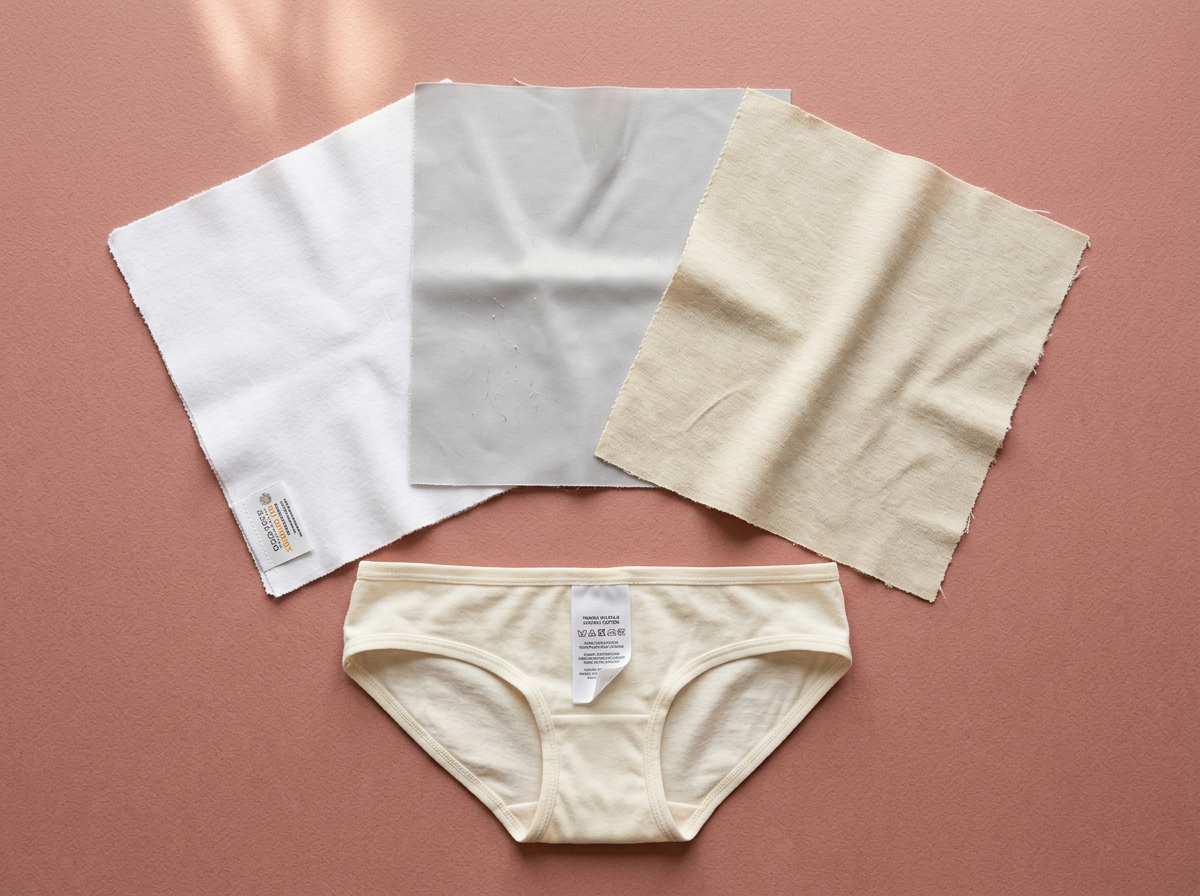
That recurring rash below your waistline. The itch that will not go away. The red marks where your underwear elastic sits. "Underwear rash" and "underwear irritation" searches have grown steadily as consumers discover their underwear may be the hidden cause of skin problems. We analyzed the four fabric-skin interaction mechanisms — bacterial microclimate, chemical contact dermatitis, pressure dermatitis, and antibacterial treatment sensitivity — with test data across 30+ brands.
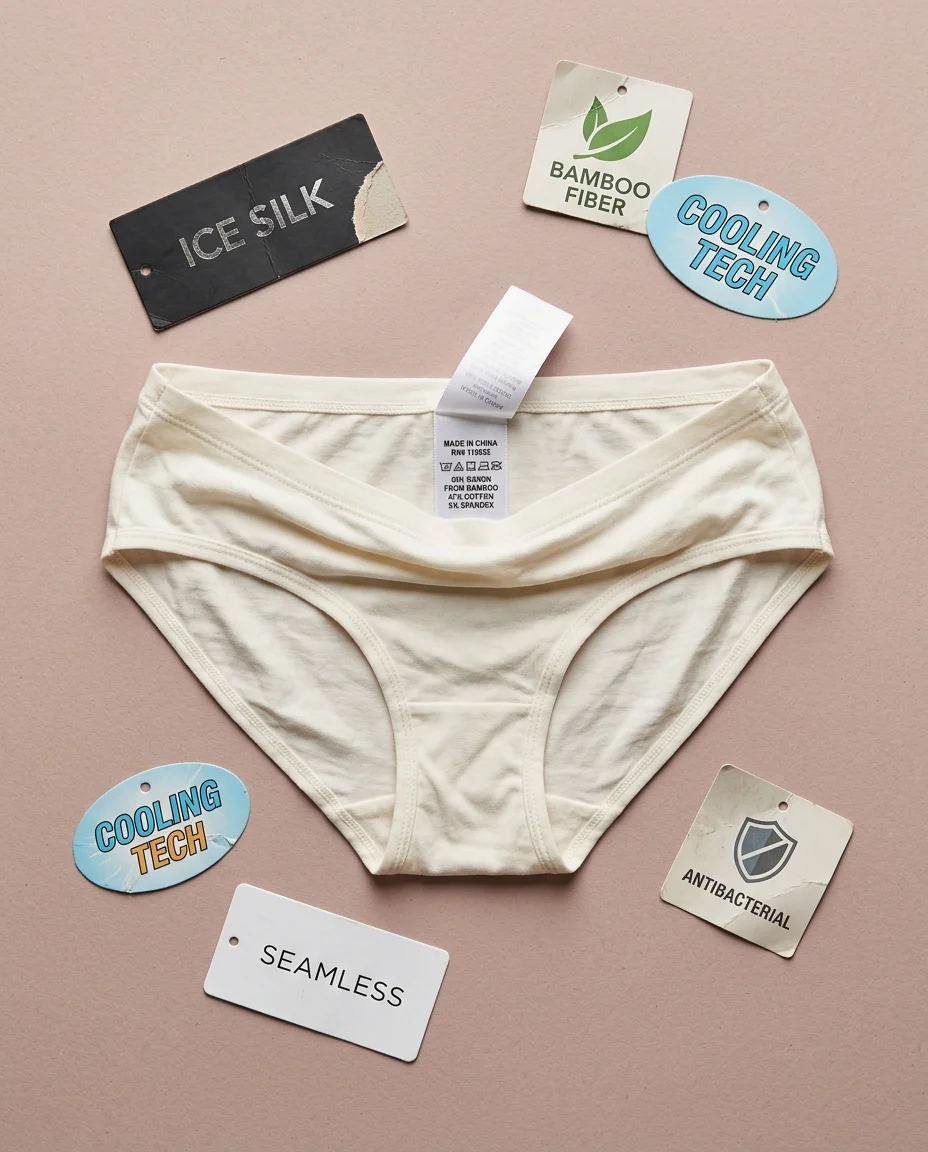
Your underwear label says "ice silk," "bamboo fiber," "seamless," "cooling technology," and "antibacterial." Three of those five terms do not mean what you think they mean. We deconstructed each marketing claim against published fiber science data and found a consistent pattern: the most expensive-sounding terms describe the cheapest materials.