Performance Testing2026-02-2810 min read
Underwear Dye Safety: Color Fastness Grades 1–5 Explained
Karl XiaoFactory Production Director
Part of the The Performance Test series
Part of the The Performance Test series
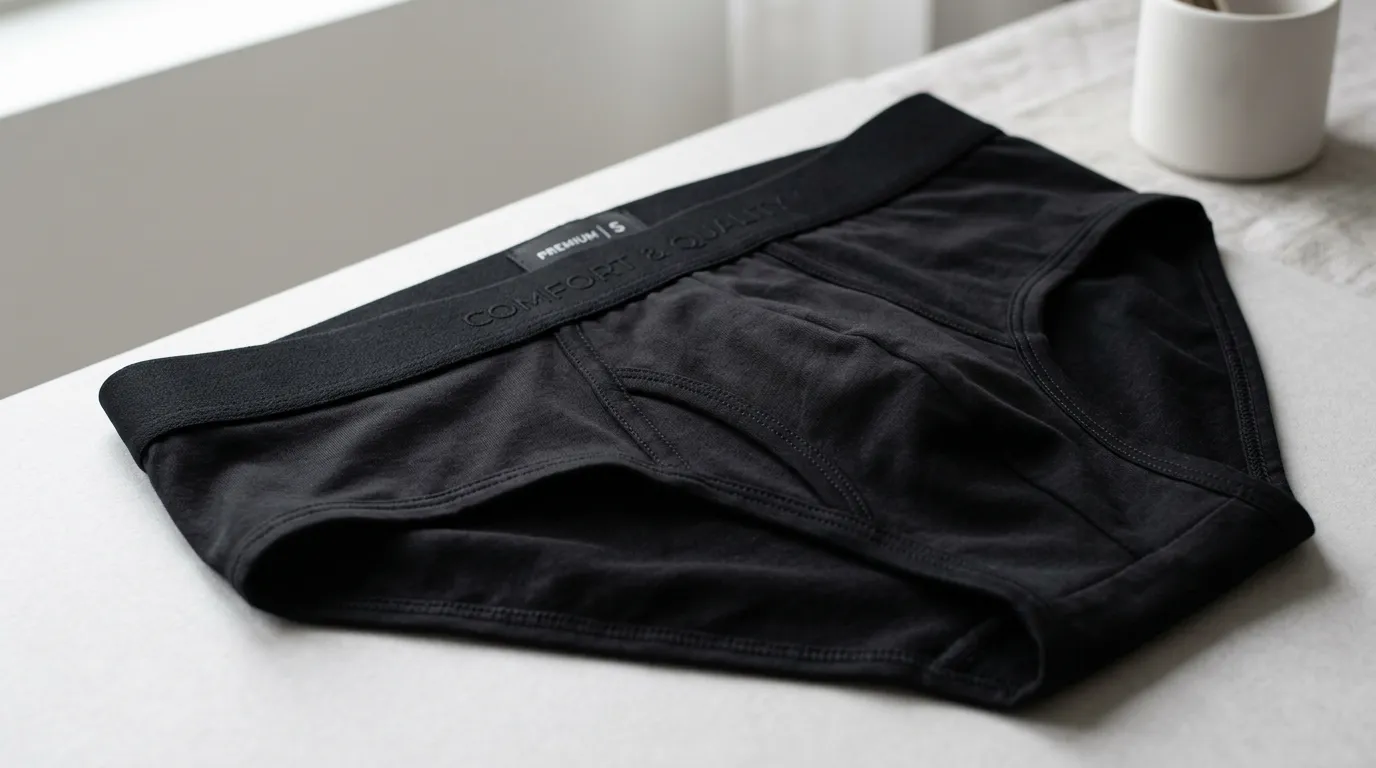
When you pull on a pair of dark-colored underwear, you probably don't think about the chemistry bonding those dye molecules to the fabric. But you should. Behind every vibrant, long-lasting color lies a complex interaction between dye chemistry, fiber structure, and something called Color Fastness Grade—a technical parameter that doesn't just determine if your clothes fade, but whether they're actually safe for prolonged intimate contact.
Let's dive into the molecular world of textile dyes and discover why premium manufacturers insist on Grade 4-5 color fastness, especially for dark underwear.
Color Fastness Grade is a standardized measurement (rated 1-5) that quantifies how well fabric retains its color when exposed to various conditions like washing, rubbing, light, and perspiration. This isn't arbitrary—it's governed by ISO 105, the international standard for textile color fastness testing that's used in every major garment manufacturing region.
Industry Standard: For underwear, Grade 3-4 is the minimum acceptable. Grade 4-5 indicates premium quality. Many low-cost manufacturers cut corners with Grade 2-3 dyes that look vibrant initially but degrade quickly.
Here's something many buyers don't realize: dark colors require significantly more dye than light colors. A deep black or rich burgundy underwear might contain 3-5 times more dye concentration by weight compared to a pastel or white garment.
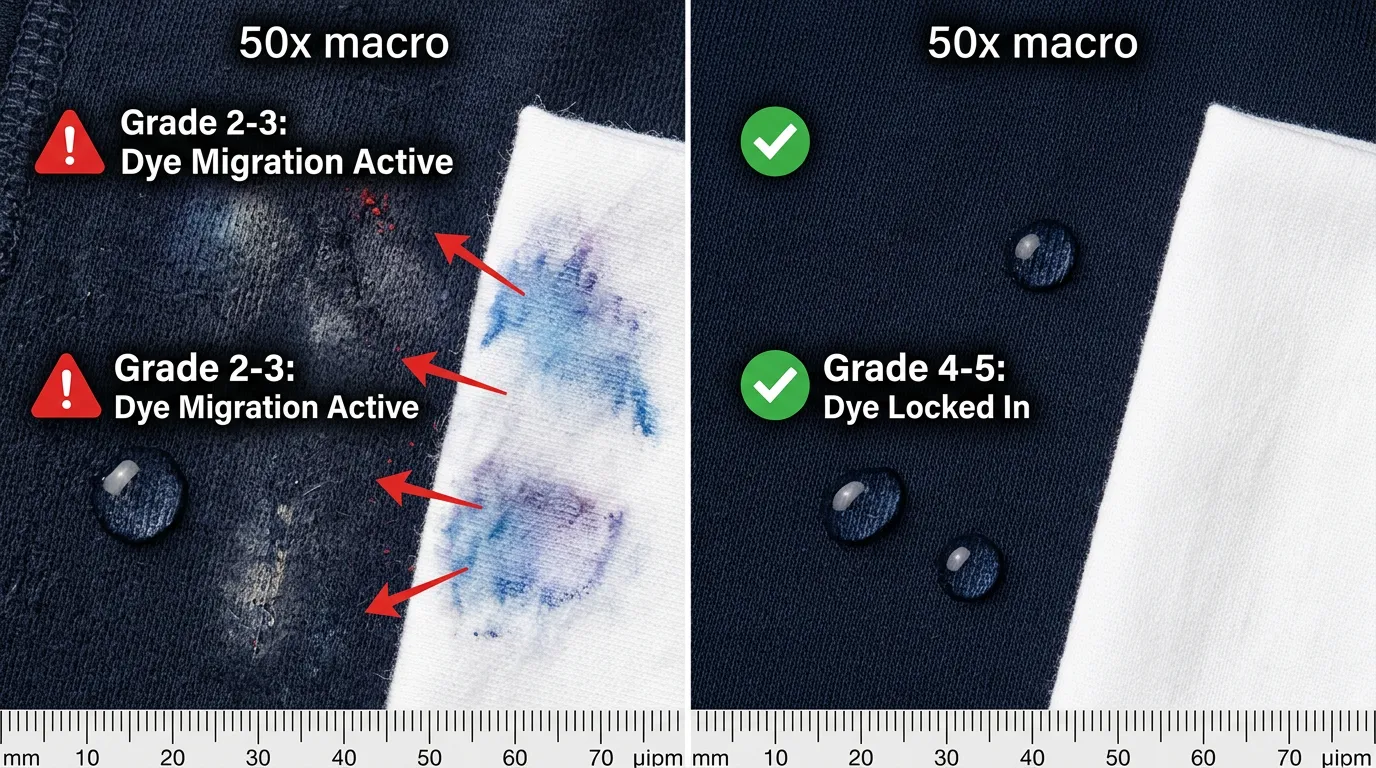
More dye means greater potential for migration. When dye molecules aren't properly bonded to the fiber (indicating low color fastness), that excess dye has nowhere to go but into whatever contacts the fabric—water in the wash, friction from movement, and yes, your skin.
As a professional apparel manufacturer, we specify reactive dyes (not direct dyes) for all dark underwear and require Grade 4-5 on ISO 105-E04 perspiration testing. Reactive dyes cost $0.25-0.40 more per kg but prevent dye migration complaints. Cheap dyes look vibrant initially but fail sweat testing.
White/Pastel Underwear: ~15% dye concentration Lower migration risk even with moderate fastness
Dark/Rich Colors: ~75% dye concentration Requires Grade 4-5 to ensure dye molecules stay locked in
This is where color fastness transitions from an aesthetic concern to a health concern. The mechanism is surprisingly simple chemistry:
Critical Insight: This is why ISO 105-E04 (Perspiration Fastness) exists. It simulates both acidic and alkaline sweat to test whether dye will release during normal wear. Many cheap garments pass wash tests but fail perspiration tests—meaning they're fine in the laundry but potentially problematic against your skin.
Not all dyes are created equal. Azo dyes represent approximately 70% of all dyes used in textile production, prized for their vibrant colors, cost-effectiveness, and ease of application. However, a subset of azo dyes can break down under certain conditions to release carcinogenic aromatic amines.
Here's the connection to color fastness: Poorly bonded azo dyes are more likely to break down. When color fastness is Grade 2-3, the dye isn't just fading—it's chemically degrading, and that degradation can release compounds you don't want absorbing through your skin.
Key Point: Premium dyes with Grade 4-5 fastness use azo compounds that don't break down into prohibited amines, or use alternative dye classes (reactive, vat, or disperse dyes) with stronger molecular bonding. Color fastness grade is effectively a proxy indicator for overall dye quality and safety.
As a professional apparel manufacturer, we require third-party lab testing (SGS, Intertek) for every color way before bulk production. Many suppliers claim "compliance" without testing. We verify absence of the 24 prohibited aromatic amines (<20mg/kg limit) and confirm Grade 4-5 across all ISO 105 tests.
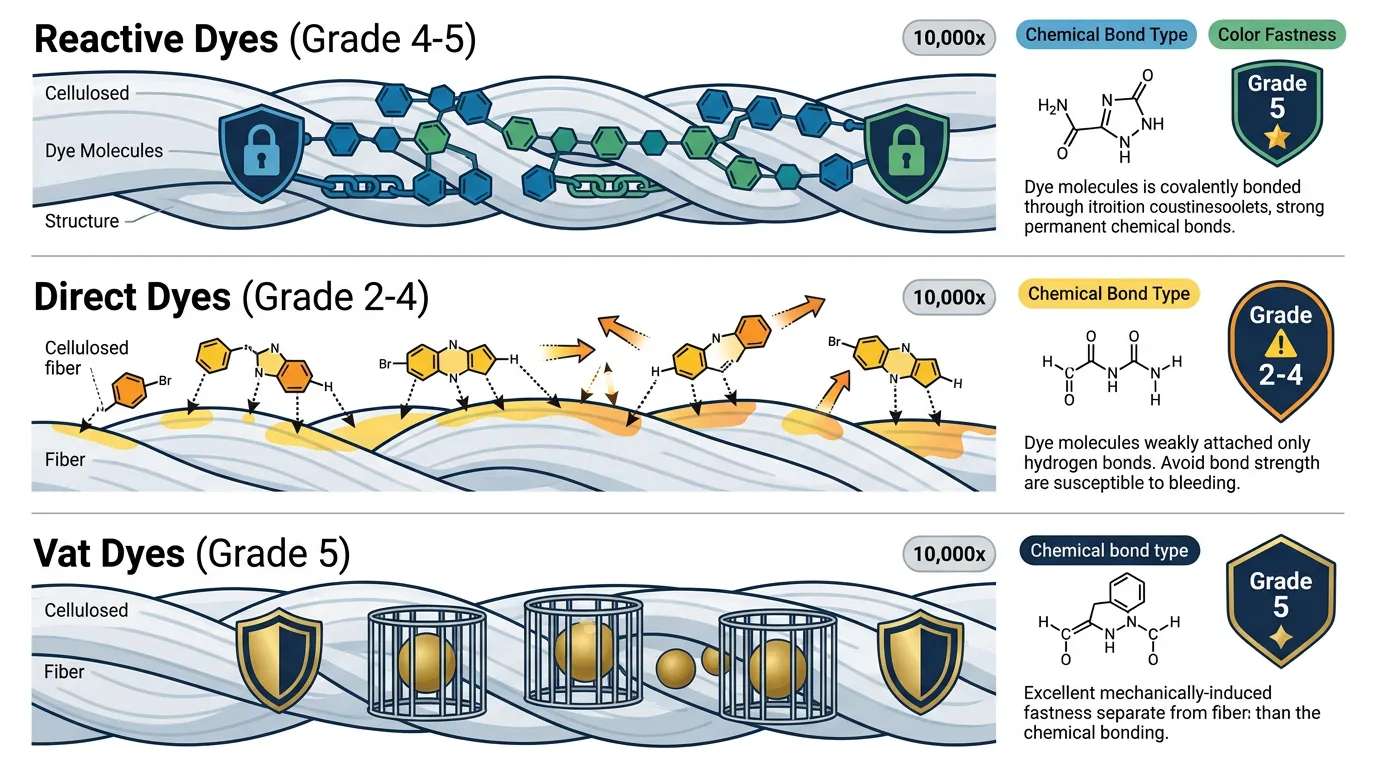
Understanding why some dyes achieve Grade 5 while others struggle at Grade 2 requires looking at the molecular level. Not all dye-fiber bonds are created equal.
⚛️ Mechanism: Covalent bonding—dye molecules actually become part of the fiber structure
Best for: Cotton, modal, bamboo cellulose fibers (common in premium underwear)
Why it excels: Covalent bonds are among the strongest chemical bonds. Once formed, they resist heat, water, sweat, and friction. This is why reactive-dyed fabrics achieve Grade 4-5 consistently.
🔗 Mechanism: Hydrogen bonding and van der Waals forces—dye adheres to fiber surface
Best for: Paper, some cotton applications, cost-sensitive production
Limitations: Weaker attachment means dye leaches more easily. Direct dyes often require after-treatments (cationic fixatives) to boost them to Grade 3-4. Even with treatments, they rarely achieve Grade 5.
🧪 Mechanism: Insoluble pigments mechanically trapped inside fibers
Best for: Workwear, uniforms, applications requiring maximum durability
Why it's premium: Complex dyeing process makes vat dyes expensive. But they're virtually indestructible—Grade 5 across all tests. Luxury underwear brands sometimes use vat-dyed cotton for premium black underwear.
Mordants are metal salts (alum, chrome, iron) that form a "bridge" between dye and fiber, significantly improving color fastness. The combination of dye + mordant + fiber creates a more stable molecular complex than dye alone.
Premium dyeing always uses optimized mordant systems. Cheap manufacturers skip mordants or use incomplete formulations to reduce cost and processing time.
When a manufacturer claims "Color Fastness Grade 4," they should be specifying which ISO 105 test that grade applies to. Color fastness isn't a single measurement—it's a suite of tests simulating different real-world conditions.
Color Fastness Requirements: • Washing (ISO 105-C06): ≥ Grade 4 • Perspiration (ISO 105-E04): ≥ Grade 4 (acidic & alkaline) • Rubbing (ISO 105-X12): ≥ Grade 4 (dry), ≥ Grade 3 (wet) • Light (ISO 105-B02): ≥ Grade 4
Note: A manufacturer who claims "Grade 4" without specifying the test is either oversimplifying or hiding poor performance in some areas. Demand the full ISO breakdown.
If you're sourcing underwear, especially dark-colored premium products, color fastness belongs in your technical specifications. Here's how to communicate it effectively:
Don't leave dye chemistry to the manufacturer's discretion:
"All dyed components must use reactive dyes (for cotton/cellulosic) or premium disperse dyes (for synthetic). Direct dyes are not acceptable without written approval and evidence of after-treatment achieving ≥ Grade 4 in ISO 105-E04."
Be explicit about which ISO 105 tests matter:
"Color fastness testing per ISO 105 series. Minimum requirements: Wash fastness (C06): Grade 4; Perspiration fastness (E04): Grade 4 both acidic and alkaline; Rubbing fastness (X12): Grade 4 dry, Grade 3 wet."
Make documentation part of your quality control:
"Supplier must provide third-party lab test reports confirming ISO 105 compliance for each color way before bulk production. Testing must be conducted on finished fabric, not yarn or greige."
Acknowledge that dark colors need higher standards:
"For dark colors (black, navy, burgundy, charcoal, and any color with >60% dye saturation): minimum Grade 4-5 required in all ISO 105 tests. Light colors: minimum Grade 3-4."
When you specify Grade 4-5 color fastness for your underwear, you're not just ensuring the color doesn't fade—you're ensuring that dye molecules stay chemically locked in the fiber where they belong, not migrating onto skin through sweat and friction.
The chemistry is clear: reactive dyes with covalent bonding, proper mordant systems, and rigorous ISO 105 testing create fabrics that are both visually durable and biologically stable. Cutting corners with Grade 2-3 dyes saves money in production but creates long-term uncertainty about what's absorbing through your customers' skin.
For premium underwear, especially dark colors, color fastness isn't optional—it's fundamental.
When you work with AuraTouchGlobal, we build Color Fastness Grade specifications into your technical requirements and verify compliance through third-party lab testing. Because we believe that what you wear against your skin for 16 hours a day deserves nothing less than molecular-level certainty.
Ready to take your brand to the next level? Read our comprehensive guide on color fastness for business owners: Color Fastness Chemistry: A Brand Owner's Guide to Dye Safety.
Learn about dye sourcing strategies, regulatory compliance, testing requirements, and how proper color fastness specifications can protect your brand and customer health.
Real-world testing for durability, comfort, and longevity